Show prices with VAT
VAT
Show prices with or without VAT?
If you’d rather view prices based on the final price you pay, then slide the button to ‘on’ at the top centre of the website.



The Traditions That Make British Horse Racing So Unique
Some date back centuries, others have emerged from generations of racegoers returning year after year. From racing folklore and royal ceremony to fashion and shared crowd rituals, these British horse racing traditions give each of the country's great meetings a character all of its own.
Together, they help make a day at the British races an experience unlike any other.
The Royal Procession at Royal Ascot
There are few sights more synonymous with British racing than the Royal Procession at Royal Ascot.Ascot's royal connections stretch back to 1711, when Queen Anne founded the racecourse, while the Royal Procession has been a feature of Royal Ascot since the nineteenth century. Before racing begins, members of the Royal Family and their guests arrive in horse-drawn landaus and make their way along the racecourse.
For racegoers, the procession marks the beginning of the day's proceedings and encapsulates what makes Royal Ascot so distinctive. Elite Flat racing sits alongside ceremony, fashion and pageantry in one of the meeting's most enduring traditions.

The Cheltenham Roar
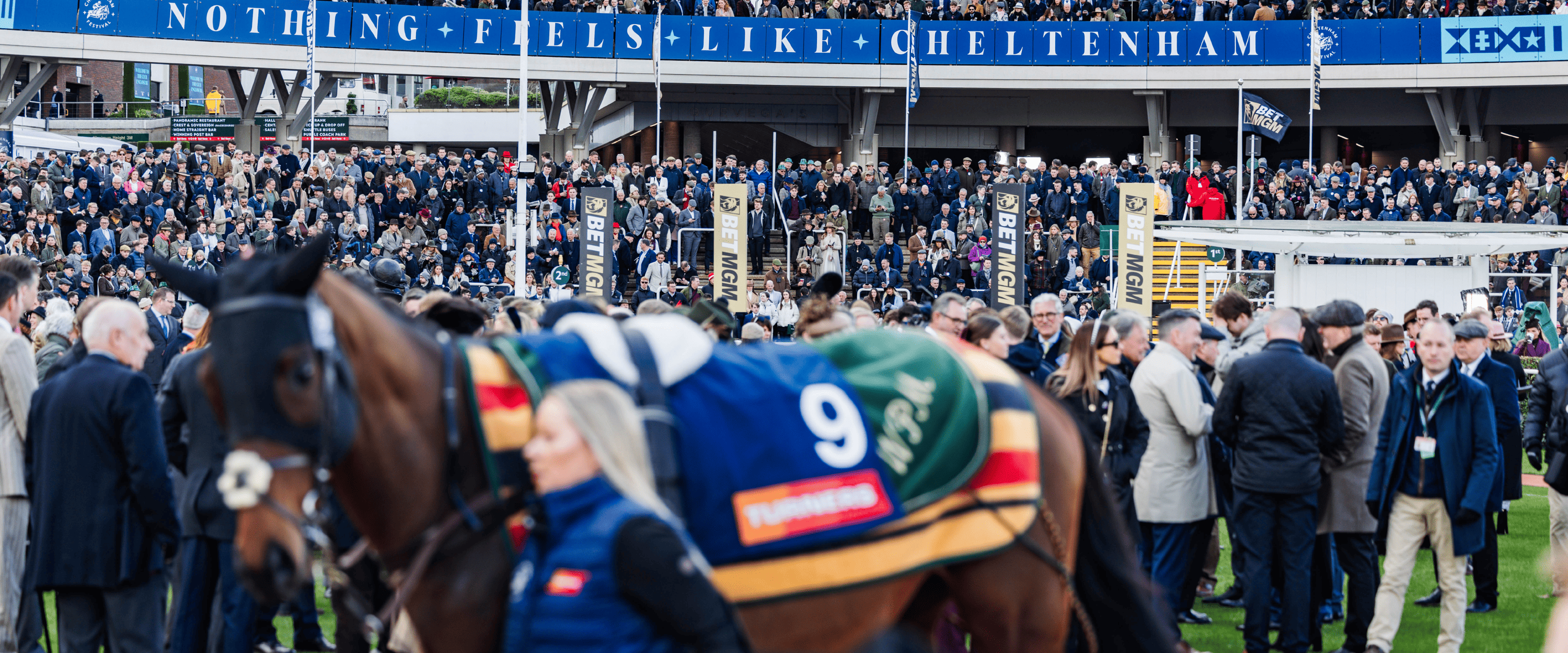
Not every great racing tradition is carefully choreographed.As the opening race of the Cheltenham Festival gets underway, the anticipation of thousands of spectators erupts into what has become known as the Cheltenham Roar.
It's a fitting beginning to four days defined by a shared passion for Jump racing. After months of build-up, that first explosion of noise from the grandstands signals that one of the biggest weeks in the racing calendar has finally arrived.
While the ceremony of Royal Ascot reflects one side of British racing culture, the Cheltenham Festival atmosphere captures another entirely: loud, passionate and driven by the racegoers themselves.

The Story Behind the Derby Name
Few British races have influenced the wider racing world quite like The Derby.First run at Epsom in 1780, the race was to be named after either the 12th Earl of Derby or Sir Charles Bunbury. Racing folklore has it that the decision came down to the toss of a coin, with Lord Derby winning the honour of lending the new race his name.
While the story remains legend rather than documented fact, the name certainly endured. Derby races can now be found across the world, all owing their name to the original contest at Epsom Downs.
There is a particularly fitting twist to the story: although Lord Derby supposedly won the toss, it was Sir Charles Bunbury who owned Diomed, winner of the very first Derby. More than two centuries later, The Derby remains one of Britain's most celebrated Flat races, keeping the name – and the story surrounding it – alive at Epsom Downs each summer.

Liverpool Style at Aintree
At Aintree, tradition comes with a distinctly Liverpool personality.
Ladies Day at the Grand National Festival has established itself as one of the city's great social occasions, bringing together racing and a famously bold approach to raceday fashion. Racegoers embrace the opportunity to dress for the occasion, with the annual Style Awards celebrating some of the day's standout looks.
British racing doesn't have one universal way of doing things. Its traditions are shaped by the places and people surrounding each racecourse, and the energy and individuality of Aintree's Ladies Day have become part of the wider Grand National Festival experience.
A Race King Charles II Ordered to Be Run 'Forever'
Newmarket's claim to the title of the Home of Horseracing is backed by centuries of history, but one tradition in particular offers a remarkable connection between the sport's past and present.The Newmarket Town Plate was first run in 1666 and was instigated by King Charles II. The King stipulated that the race should continue to be run 'forever', and more than 350 years later, that tradition is still being honoured.
Today, the race is contested by amateur riders over three and three-quarter miles and is the only race each year to use part of Newmarket's original Round Course.
In a sport filled with historic trophies and famous names, there is something particularly special about a race continuing to be staged centuries after a king instructed that it should never disappear.
Singing Around the Bandstand at Royal Ascot
Royal Ascot's traditions don't end with the final race.After racing, racegoers gather around the Bandstand for the traditional singing, extending the atmosphere beyond the day's sporting action. Thousands can join in as familiar songs bring another day at Royal Ascot to a distinctly communal close.
It's also a reminder that not every racing tradition needs hundreds of years of history behind it. Traditions endure because people continue to embrace them, and singing around the Bandstand has become another shared ritual associated with the Royal meeting.
More Than the Racing
Perhaps what makes British horse racing so unique isn't simply how old some of its traditions are, but the fact that they continue to mean something to racegoers today.A race first staged on the orders of Charles II can sit within the same sporting culture as the Cheltenham Roar or Aintree's expressive raceday fashion. The Royal Procession brings ceremony to Ascot, while a story passed down for generations about a coin toss at Epsom has become part of Derby folklore.
At Keith Prowse, we believe the traditions surrounding a raceday are part of what makes the experience so special. Through premium horse racing hospitality, guests can enjoy exceptional food and service while being immersed in the atmosphere, heritage and sporting action that give each meeting its distinctive character.
The racing will always be at the heart of the day, but it's these shared rituals and traditions that turn Britain's greatest race meetings into occasions people return to year after year.